
Like the heroes of Greek mythology, Eli embarks on a true descent into the underworld.

In the fifth season of FAUDA, available on Netflix since September 8, Eli steps outside the framework of the team’s mission to embark on a terrible quest for revenge. A journey into the depths of pain and darkness, carried by Yaakov Zada-Daniel’s masterful performance.
Warning: This article contains major spoilers for the fifth season of FAUDA.
As Eli descends into hell, Yaakov Zada-Daniel reaches new heights.
That sentence alone could sum up the fifth season of FAUDA. It is a season unlike any other probably the most intimate, the most painful and the most directly connected to contemporary history since the series began.
Originally, this fifth season was intended to tell a very different story. But after October 7, 2023, its creators, Lior Raz and Avi Issacharoff, decided to abandon the storyline they had already developed and begin again. How could they continue writing FAUDA after a day that had so brutally surpassed anything fiction could have imagined? How could they return to entertainment without confronting the trauma that had shaken Israel and profoundly affected the actors and members of the production team?
Their answer was not to avoid the wound, but to place it at the heart of the story.
Two years after October 7, the characters of FAUDA are no longer simply fighters embarking on another operation. They are haunted, grieving and profoundly changed. The war is no longer taking place only in the field. It has settled within them.
And among them is Eli.
Eli, the team’s pillar of strength

Since his first appearances in FAUDA, Eli has been one of the pillars of the unit. He is the strong, loyal and responsible one the man who leads, makes decisions and protects the others when everything falls apart. His presence does not rely on displays of strength or grand speeches. It reveals itself through his natural authority, his gaze and the way he inhabits silence.
Yaakov Zada-Daniel has built this character with remarkable control, allowing restraint to give the emotion its full force. Over the seasons, he has given Eli a particular depth, making him far more than simply another member of the unit. Behind the fighter and the leader, he has always allowed us to glimpse a reserved man, attentive to others and capable of containing his emotions in order to keep moving forward.
But this time, something inside him has been irrevocably broken.
October 7 took his family from him. Eli now lives with an absence that has consumed his entire being. When he learns that one of those responsible for the massacre may be in Marseille, he sets out to wage his own war.
Like the heroes of Greek mythology, Eli embarks on a true descent into the underworld.
When pain becomes revenge

Eli is no longer fighting only his enemy: he is confronting a pain that has become too immense to contain.
His quest for revenge gradually deprives him of every point of reference. The former commander, who once knew the rules and understood the consequences of every decision, now ventures beyond all boundaries. Reason gives way beneath the weight of a pain that can no longer be contained. The instinct to protect becomes self-destruction.
Eli keeps moving forward because stopping would force him to contemplate the abyss left behind by the massacre of October 7.
The full power of Yaakov Zada-Daniel’s performance lies in his ability to carry on his shoulders a pain that extends beyond the character himself and becomes part of the pain of the Israeli people. He never seeks to make this suffering spectacular. He makes it exist within Eli’s body: in a heavier gait, a closed expression and a gaze that sometimes seems unable to see the world around him.
The anger is there, but beneath it lies a devastating and bottomless grief.
Yaakov Zada-Daniel portrays a man driven mad by pain without ever turning Eli into a caricature. His violence is born from a silence held for too long. It erupts because words are no longer enough.
An actor who commands silence
In this fifth season, Yaakov Zada-Daniel turns silence into a language of its own. He needs neither grand gestures nor lengthy speeches to express Eli’s inner devastation. Everything emerges through what he holds back, through what he still prevents from erupting.
His shoulders and his soul carry the weight of those who are gone. His face remains closed, and every movement seems to demand an effort. He continues to move forward, but each step appears to take him further away from the man he once was.
His gaze lies at the heart of the performance. It can harden with anger, disappear into absence or, for a fleeting instant, reveal the man Eli was before the massacre. These almost imperceptible variations give the character his depth and make his pain immediately tangible.
When that pain finally erupts, the emotion is all the more powerful because it has been contained for so long. Yaakov Zada-Daniel does not simply portray a man consumed by revenge: scene after scene, he shows us how revenge destroys the person who surrenders to it.
Facing Abu Zahar
The confrontation between Eli and Abu Zahar could not rely solely on physical violence. It had to become a psychological battle between two men, each attempting to identify and reach the other’s most vulnerable point.
Ali Ali, who plays Abu Zahar, explains it perfectly: the looks, the silences and the rhythm of the scenes were essential in building this tension. He describes Yaakov Zada-Daniel as “a generous, precise and deeply present actor,” capable of inspiring his scene partner to raise his own level.
Facing Abu Zahar, Yaakov Zada-Daniel’s performance becomes a duel of looks and silences. The power of these scenes comes not only from what is said or shown, but also from everything the two characters know, sense and attempt to conceal.
The true heart of the season
Doron remains the central figure of FAUDA. He too carries the wounds of October 7 and remains the man around whom the unit reforms. But this year, Eli is the season’s emotional heart.
Through him, the season directly explores the line between justice and revenge. It shows how a man who has always protected others can lose himself when there is no one left for him to protect. It does not judge his pain, but observes what that pain turns him into.
Eli consequently becomes one of the most tragic characters in the entire series.
Yaakov Zada-Daniel achieves what matters most: he makes us understand his character, even when we can no longer approve of his choices. He preserves the connection between the man Eli once was and the man he is becoming. Behind every violent act remains the memory of the loyal commander, the trusted companion and the man deeply devoted to those he loved.
It is precisely this contradiction that makes his performance so moving.
Yaakov Zada-Daniel, finally in the spotlight
The fifth season finally gives him the space he needs to reveal the full extent of his talent.
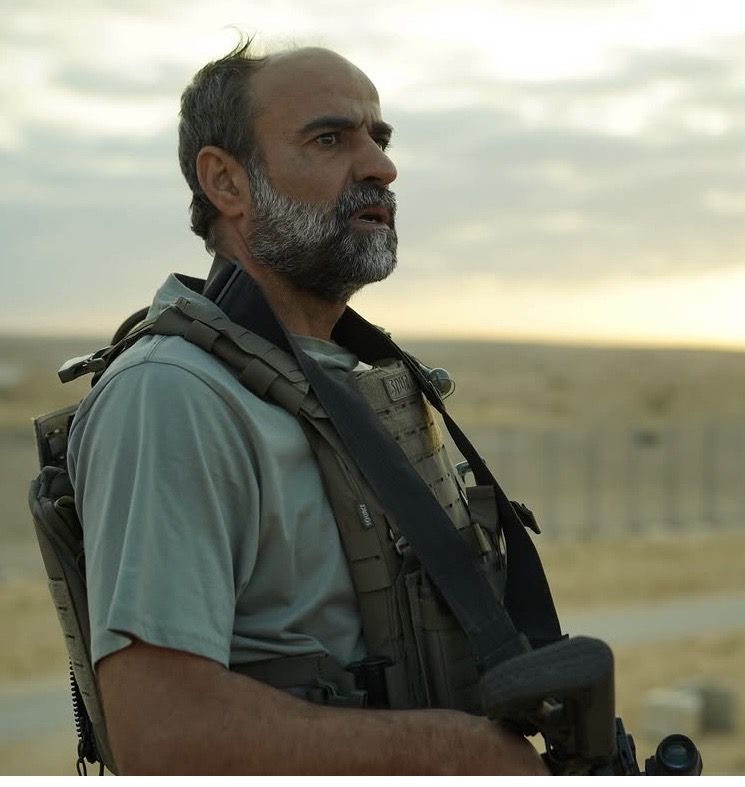
Since the first season, Yaakov Zada-Daniel has built Eli with patience, precision and discretion. He has never sought to take the spotlight away from the others. He has given the character a constant, solid and essential presence.
The fifth season finally gives him the space he needs to reveal the full extent of his talent.
He carries the darkest dimension of the story, but also its most human. His performance is not limited to portraying the pain of a grieving man. It tells the story of a human being’s transformation, the gradual disappearance of his limits and his desperate struggle to preserve what still remains of himself.
For Cinerama Boulevard, Yaakov Zada-Daniel’s performance is exceptional: intense, deeply embodied and profoundly moving in its truth. The actor does not merely make Eli’s pain visible. He gives it a body, a gaze and a silence. He takes his character to the point of collapse without ever allowing him to lose his authenticity.
This year, Cinerama Boulevard will also inaugurate the International Cinerama Boulevard Awards. Created to honour artists whose work transcends borders and reaches audiences around the world, these new awards will recognise Yaakov Zada-Daniel as one of the laureates of their inaugural edition.
Through this distinction, Cinerama Boulevard wishes to celebrate the power of his performance in the fifth season of FAUDA, while bringing international attention to an Israeli actor whose remarkable talent deserves recognition far beyond his country.
Yaakov Zada-Daniel is no longer simply the powerful performer behind a character who has become indispensable. Today, he stands among the actors who fully carry the series and give it its depth.
This season marks a turning point for Eli. It should also mark a turning point in the career of the actor who gives him his face, his strength, his silences and his soul.
The deeper Eli sinks into darkness, the more brightly the light of Yaakov Zada-Daniel’s talent shines. At the height of his art.
Sandrine Aloa-Mani
