
Behind Dana’s dark gaze and determination, Meirav Shirom brings to life a complex character whose strength, silences and restrained emotions reveal the depth of her performance.
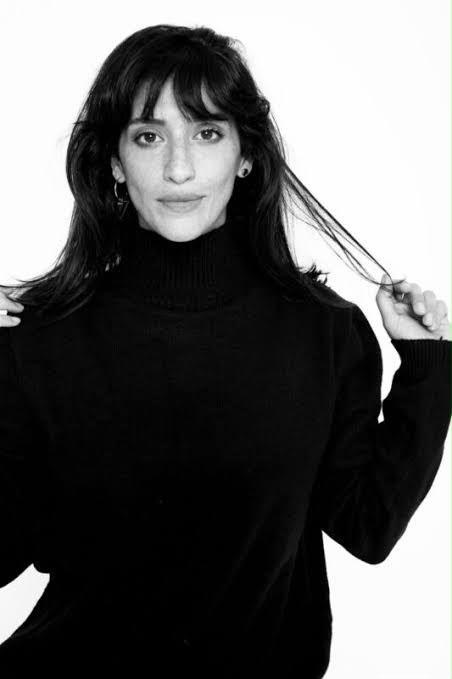
EXCLUSIVE INTERVIEW | CINERAMA BOULEVARD
Authority doesn’t necessarily come from being dominant or aggressive. It can come from knowledge, experience, emotional intelligence and the ability to remain calm when everyone around you is under pressure. MEIRAV SHIROM
In the predominantly male world of Fauda, Dana occupies a distinctive place. A Shin Bet intelligence officer working alongside Captain Ayub, she holds a position of responsibility in a series where female characters are more often introduced through their personal relationships with the men at the centre of the story
Dana is different. Her presence is defined neither by a romantic relationship nor by a family connection, but by her professional responsibilities and the authority she exercises.
She belongs to the world of intelligence, strategy and decision-making. She works alongside men accustomed to wielding power in situations where the stakes are exceptionally high. She confronts terrorists, conducts interrogations, gives orders and leads operations. When those she faces attempt to challenge her authority because she is a woman, she knows how to command their respect.
With Dana, so much is conveyed through her eyes. Her gaze is often dark, almost impenetrable, and she rarely smiles. In the fourth season, one of her colleagues even reminds her that she has a reputation for having a “heart of stone.” A remark that says a great deal about the image she projects in a world where emotional control seems inseparable from the exercise of power.
Yet behind this apparent coldness lies a more nuanced character. Dana exercises a demanding, sometimes uncompromising authority, without allowing the nature of her work to erase her sensitivity. It is precisely in this tension between the rigour of her responsibilities and the humanity she occasionally allows to emerge that Meirav Shirom brings such depth to the character.
Over the seasons, Dana’s position evolves. Initially working under Captain Ayub’s authority, she gradually takes on greater responsibilities and establishes her own place within the intelligence service, while maintaining a complex professional relationship with her superior.
Through her portrayal of Dana, Israeli actress Meirav Shirom gives a distinctive presence to a woman whose strength is expressed without ostentation, bringing another dimension of female authority to the world of Fauda.
For Cinerama Boulevard, we had the pleasure of speaking with Meirav Shirom about her character, her artistic journey and the experiences that have shaped her work as an actress.
DANA, A WOMAN AMONG MEN
CINERAMA BOULEVARD — In Fauda, most of the female characters are introduced through their personal or family relationships with the male protagonists. Dana, however, is different. She is a Shin Bet officer whose role is defined primarily by her professional responsibilities, rather than by her relationship with a man. She works in a predominantly male environment, where authority, discipline and decision-making are central to her position. As an actress, how do you approach this particular aspect of Dana’s character? And how do you see her place as a woman in this male-dominated world?
MEIRAV SHIROM — I think what makes Dana interesting is precisely the fact that she is defined by who she is, rather than by her relationship with someone else. She is a professional woman in a very demanding, male-dominated environment, and she doesn’t need to prove herself by being louder or tougher than the men around her. She has her own intelligence, instincts and inner strength.
For me, Dana represents a woman who has earned her place through her abilities and dedication. She is not trying to be one of the men. She is simply claiming her place as a woman, with all the qualities that make her who she is.
CINERAMA BOULEVARD — When we first meet Dana, she works under Captain Ayub’s authority. Over the seasons, her character gradually gains more responsibility and independence. Did this evolution lead you to change the way you portrayed her, particularly through her body language, voice, posture or facial expressions?
MEIRAV SHIROM — I think Dana’s evolution is a gradual process of discovering her own power. At the beginning, she is more in a position of learning, observing and proving herself. As the story progresses, she becomes more confident in her decisions and more aware of her own abilities.
I tried not to play this transformation in an obvious way. I think real growth often happens quietly, through small changes in the way a person carries herself, speaks, makes decisions and reacts under pressure. Dana doesn’t suddenly become a different person. She grows into herself.
“Dana doesn’t suddenly become a different person. She grows into herself.
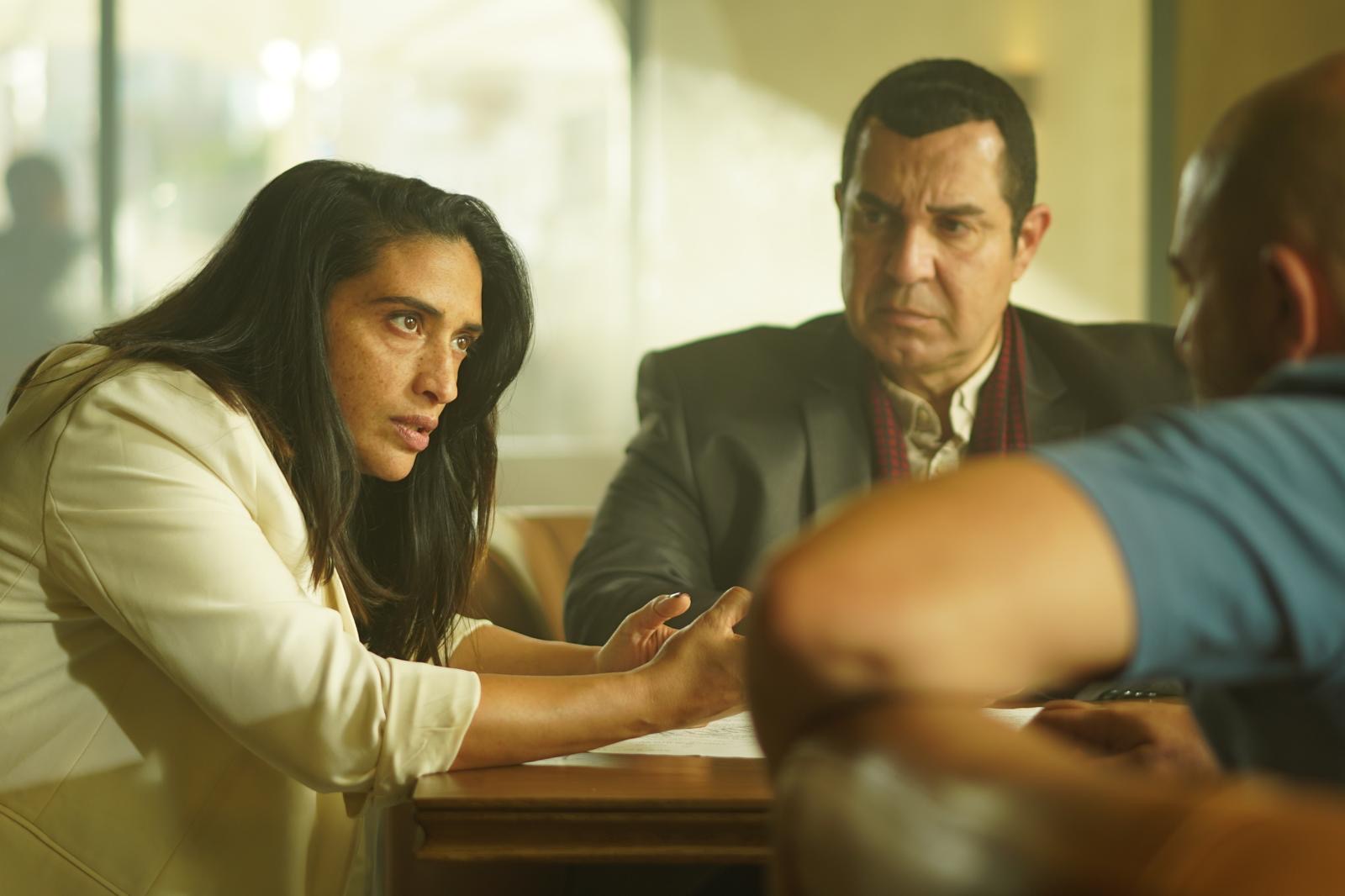
CINERAMA BOULEVARD — You met women working for the Shin Bet to prepare for your role. How did these encounters change your perception of Dana and, more broadly, of female authority?
MEIRAV SHIROM — Meeting these women was a very meaningful experience for me. I was impressed by their professionalism, intelligence and ability to function in extremely complex and stressful situations.
What struck me most was that authority doesn’t necessarily come from being dominant or aggressive. It can come from knowledge, experience, emotional intelligence and the ability to remain calm when everyone around you is under pressure.
These encounters helped me understand Dana beyond the fictional character. They reminded me that there are many women working in demanding positions who don’t necessarily seek recognition. They simply do their jobs with extraordinary commitment.
CINERAMA BOULEVARD — The professional relationship between Dana and Ayub is one of the key elements of her character’s development. How would you describe this relationship, and what did you learn from working with Itzik Cohen?
MEIRAV SHIROM — I see their relationship as a combination of professional respect, trust and a certain father-daughter dynamic, although it is never explicitly defined that way. Ayub is an experienced figure who knows the system very well, while Dana brings her own perspective, intelligence and determination.
What I find interesting is that their relationship evolves. There is room for disagreement, learning and mutual respect.
Working with Itzik Cohen was a real pleasure. He is a wonderful actor, with great presence, generosity and a very precise sense of timing. I learned a lot simply by observing the way he works and the way he brings depth and humanity to his character.
FROM DANCE TO ACTING
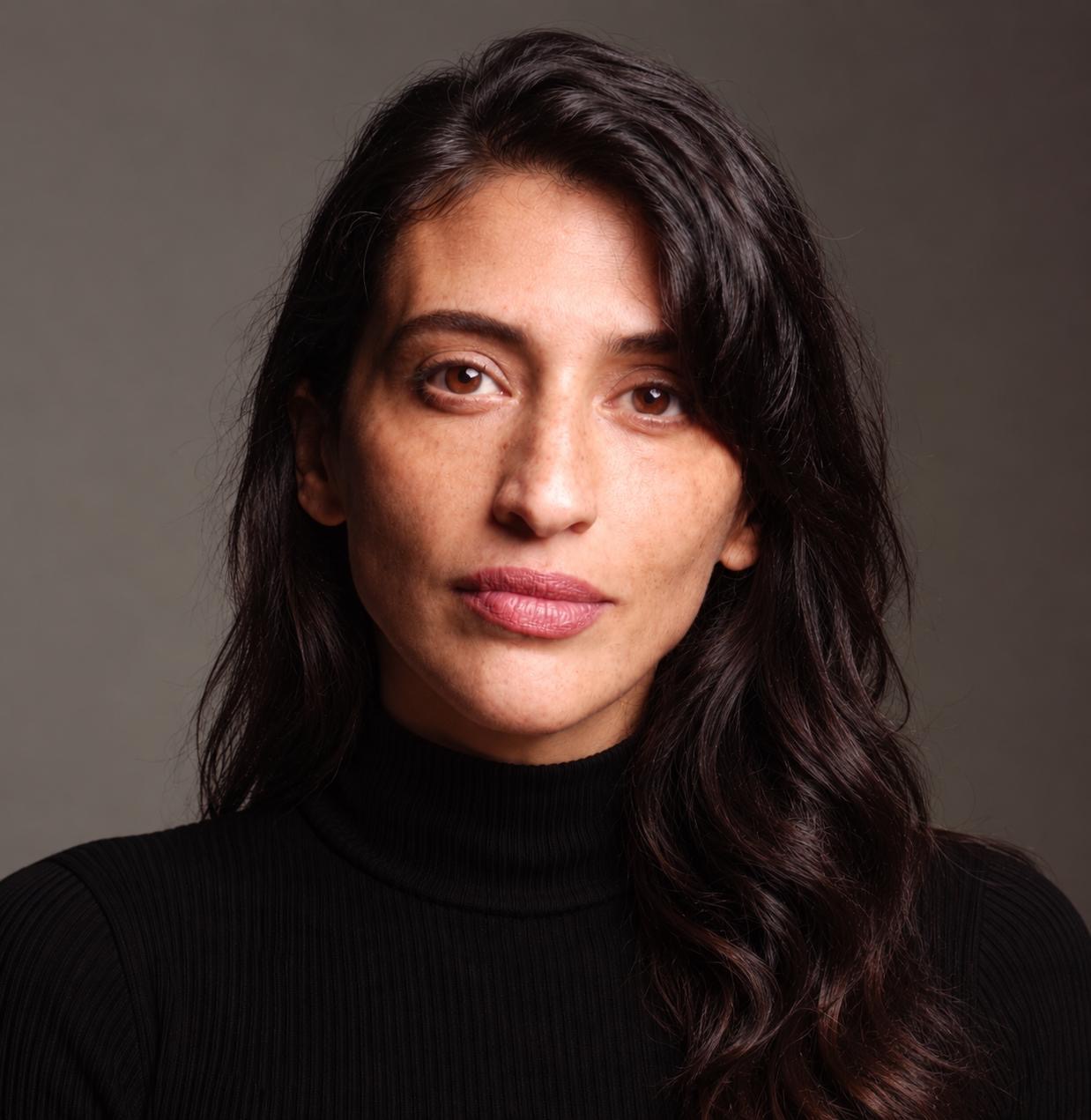
CINERAMA BOULEVARD — You come from the world of dance, where discipline, self-control and respect for rules are essential. In Fauda, Dana also works in a highly structured environment, where discipline and respect for hierarchy are fundamental. Did you draw on your experience as a dancer to build this character, particularly in the way she controls her emotions and exercises her authority?
MEIRAV SHIROM — Absolutely. Dance has shaped me profoundly, not only as an artist but also as a person. It taught me discipline, precision, body awareness and the importance of being fully present.
I think these qualities are very relevant to Dana. She is a character who often has to control what she feels and maintain a certain level of composure, even in extreme situations.
As a dancer, you learn that the body often expresses things that words cannot. I think I brought that awareness into my work as an actress. Sometimes a small gesture, a look or even stillness can communicate much more than dialogue.
Dance also taught me that discipline doesn’t limit freedom, it actually creates the conditions for it.
Sometimes a small gesture, a look or even stillness can communicate much more than dialogue.”
CINERAMA BOULEVARD — Before becoming an actress, you were pursuing a career in dance. At what point did you realise that theatre was the path you wanted to follow? And what does your artistic training bring to your work in front of the camera today?
MEIRAV SHIROM — Dance was my first great love, and it will always be an essential part of who I am. My transition into acting wasn’t necessarily a decision to leave dance behind, but rather a discovery of another way to express myself.
At a certain point, I realized that I was drawn not only to movement and physical expression, but also to storytelling, characters and the complexity of human relationships. Acting opened up a whole new world for me.
My artistic training continues to influence my work in front of the camera. It has given me a strong connection to my body, a sense of rhythm, discipline and the ability to listen and respond. I believe that everything an artist experiences becomes part of their artistic language.
I don’t see dance and acting as two separate chapters. They are two different languages that continue to communicate with each other inside me.
MEIRAV SHIROM, BEYOND FAUDA
CINERAMA BOULEVARD — Much of your artistic career has been shaped by theatre, where you have also explored comedy. In Fauda, however, you play a particularly serious and disciplined character. What attracts you to such different roles, and what does this diversity bring to your work as an actress?
MEIRAV SHIROM — I think I am attracted to people, to their contradictions and to the different layers that exist within every human being.
Comedy and drama may seem like opposite worlds, but for me they are actually very close. Both require honesty, vulnerability and a deep understanding of human behavior. Sometimes the funniest moments come from the most painful places, and sometimes the most dramatic situations contain something unexpectedly funny.
I enjoy moving between different genres because each one challenges me in a different way. I don’t want to be limited to one type of character or one definition of who I am as an actress.
I think diversity keeps me curious, pushes me out of my comfort zone and allows me to discover new parts of myself.
CINERAMA BOULEVARD — Beyond the international success of Fauda, what are your artistic ambitions and aspirations today? Is there a role, a character or a project you still dream of bringing to life?
MEIRAV SHIROM — I feel that I am still very much on a journey of discovery as an actress. I would love to continue exploring complex, unexpected and unconventional female characters women who are not necessarily easy to understand or to define.
I am particularly drawn to stories that explore human relationships, identity, power, vulnerability and the contradictions within us.
I would also love to work more internationally, meet artists from different cultures and be part of projects that allow me to step into unfamiliar worlds.
I don’t have one specific dream role. What excites me most is the possibility of being surprised by a character or a story I never imagined myself being part of. I want to keep growing, taking risks and remaining curious. For me, that’s what makes this profession so fascinating.
“I want to keep growing, taking risks and remaining curious.”
BEYOND FAUDA, AN ARTISTIC JOURNEY STILL UNFOLDING
While Dana has brought Meirav Shirom to the attention of an international audience, the actress’s artistic identity extends far beyond the boundaries of Fauda.
From the discipline of dance to the expressive freedom of theatre and cinema, her career has been a continuous journey of artistic exploration, with each experience enriching the next. Her interest in the contradictions of human nature, her desire to move between drama and comedy, and her openness to different cultures reveal an actress who refuses to be confined to a single artistic identity.
Perhaps this is what makes her journey particularly compelling: the desire to continue discovering, experimenting and embracing the unexpected, without allowing success to become a limitation.
And while Dana has found her place among the men of Fauda, Meirav Shirom continues to follow her own path, guided by the curiosity of an artist for whom the most fascinating roles may still be waiting to be discovered.
Sandrine Aloa-Mani
